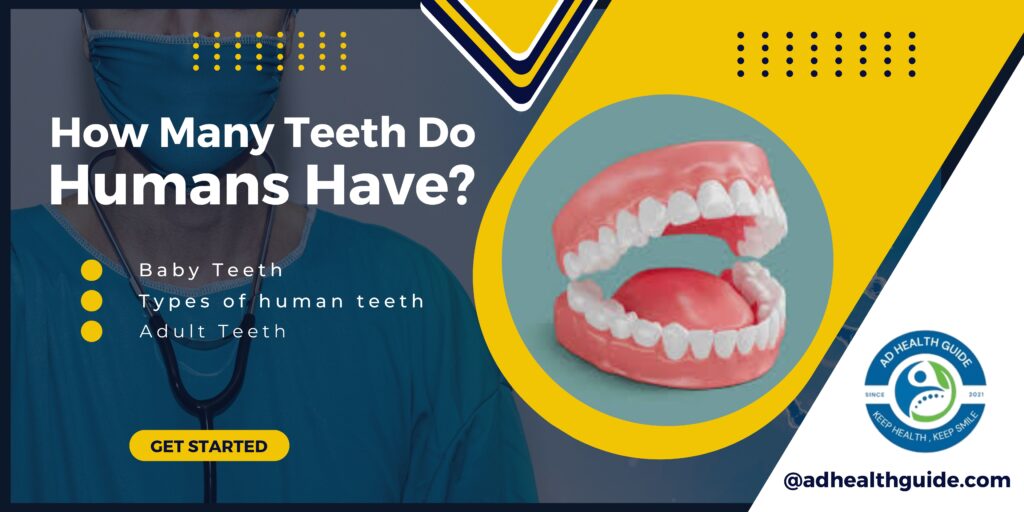
If you have ever found yourself wondering, “How many teeth do humans have?” you are not alone. It is one of the most commonly searched dental health questions in the United States, and the answer is a little more nuanced than most people expect. Whether you are a curious beginner, a parent tracking your child’s dental development, or a healthcare professional brushing up on the basics, this guide covers everything you need to know about human tooth count, types, and care — all in plain American English.
So when someone asks, “How many teeth do adults have?” the most accurate answer is 28 to 32, depending on whether the wisdom teeth are present or have been removed.
Incisors (8 teeth)
Incisors are the eight front teeth — four on the upper jaw and four on the lower. These are the most visible teeth in your smile. They have a sharp, flat edge designed for cutting into food when you take a bite. Incisors are also the first permanent teeth to erupt, typically appearing around age 6 to 7.
The Quick Answer: How Many Teeth Do Humans Have?
Humans develop two complete sets of teeth over the course of their lifetime. Children start with 20 primary teeth, commonly called baby teeth or deciduous teeth. Adults then develop up to 32 permanent teeth, which includes four wisdom teeth. However, because many Americans have their wisdom teeth removed, it is very common for adults to have just 28 teeth — and that is perfectly normal. Here is the simple breakdown by age:| Life Stage | Tooth Count | Tooth Type | Age Range |
| Baby/Infant | 20 | Primary (deciduous) | 6 months – 3 years |
| Child (transitional) | Mix of 20 and growing | Baby + permanent mix | 6 – 12 years |
| Teen/Adult (no wisdom) | 28 | Permanent | 12 – 17 years |
| Adult (full set) | 32 | Permanent + wisdom teeth | 17 – 25 years |
Baby Teeth: How Many Do Children Have?
Children have 20 baby teeth in total, 10 on the top jaw and 10 on the bottom. These primary teeth typically begin erupting around 6 months of age and are usually fully in place by the time a child reaches 3 years old. While they are temporary, baby teeth are critically important. They help children chew food properly, support correct speech development, and hold space in the jaw for incoming permanent teeth. A common misconception is that baby teeth do not need much care because they fall out anyway. That thinking can cause real problems. Tooth decay in baby teeth can lead to pain, infections, and complications with the adult teeth that follow. The American Dental Association recommends beginning oral care as soon as a baby’s first tooth appears, or even before, by wiping the gums with a clean, damp cloth. Around age 6, children begin to lose their baby teeth. This process continues gradually until the early teen years, when most permanent teeth have come in.Adult Teeth: A Full Breakdown of the 32 Permanent Teeth
Most adults have 32 permanent teeth when the full set has developed, including wisdom teeth. Each tooth type plays a specific role in how we bite, chew, and process food. Understanding the different types of teeth is useful whether you are visiting the dentist, helping a child through their dental development, or simply satisfying your curiosity.| Tooth Type | Count (Adults) | Function | Location |
| Incisors | 8 | Cutting & biting food | Front center |
| Canines | 4 | Tearing & gripping food | Corner of mouth |
| Premolars | 8 | Crushing & grinding | Between canines & molars |
| Molars | 8 | Heavy chewing & grinding | Far back of mouth |
| Wisdom Teeth | 4 | Grinding (often removed) | Very back, third molars |
Canines (4 teeth)
Canine teeth, also called cuspids or eye teeth, are the pointed teeth on either side of your incisors. Most people have four of them — one in each corner of the mouth. Their sharp, pointed shape makes them ideal for tearing and gripping tougher foods like meat. Permanent canines generally come in between ages 9 and 13.Premolars (8 teeth)
Premolars, also known as bicuspids, sit between the canines and the molars. Adults have eight premolars in total. They have a broader, flatter surface than canines, making them well-suited for both tearing and crushing food. There are no premolars in the primary (baby) teeth set — premolars are exclusively adult teeth, typically arriving between ages 10 and 12.Molars (8 teeth, not counting wisdom teeth)
Molars are the large teeth at the back of your mouth. Adults have eight molars — four on the top and four on the bottom, not including wisdom teeth. These are your strongest, most powerful teeth and are responsible for about 90% of all chewing. The first permanent molars usually arrive around age 6, the second set around age 12.Wisdom Teeth (up to 4 teeth)
Wisdom teeth are officially called third molars. They are the last teeth to erupt, typically coming in between the ages of 17 and 25. Most people have four wisdom teeth — one in each back corner of the mouth — but some people never develop all four, or any at all. Because modern jaws are often too small to accommodate them, wisdom teeth frequently become impacted or grow in at awkward angles, causing crowding, pain, or infection. That is why many dentists in the United States recommend removing them as a preventive measure, even before symptoms appear.Why Does Your Tooth Count Matter for Your Health?
Your total number of teeth is more than just a trivia fact. Tooth count directly impacts how well you chew and digest food, how clearly you speak, the alignment of your jaw, and the overall structure of your face. Missing teeth — especially molars — can shift the remaining teeth out of alignment over time, increasing the risk of gum disease, jaw pain, and uneven wear on the remaining teeth. If you are an adult and notice you have fewer teeth than expected — not counting removed wisdom teeth — it is worth discussing with your dentist. Missing teeth can sometimes indicate underlying conditions such as periodontal (gum) disease, tooth decay, or congenital hypodontia, a condition where some permanent teeth simply never develop. Dental X-rays and a routine exam are the best tools for understanding your individual tooth development.How to Keep All Your Teeth Healthy
Whether you have 28 or 32 teeth, protecting what you have is essential. Good dental habits in the United States are straightforward, yet millions of Americans still struggle with preventable tooth loss. Here are the core practices recommended by dental professionals:- Brush your teeth at least twice daily using fluoride toothpaste, for a full two minutes each session.
- Floss once a day to remove plaque and food particles from between teeth where your toothbrush cannot reach.
- Visit your dentist every six months for a professional cleaning and check-up, or more frequently if recommended.
- Limit sugary drinks and foods, as sugar feeds the bacteria that cause cavities and gum disease.
- Stay hydrated. Drinking water — especially fluoridated tap water — helps rinse away bacteria and supports enamel health.
- Avoid smoking or using tobacco products, which significantly increase the risk of gum disease and tooth loss.
- Wear a mouthguard if you play contact sports, and ask your dentist about a night guard if you grind your teeth while sleeping.