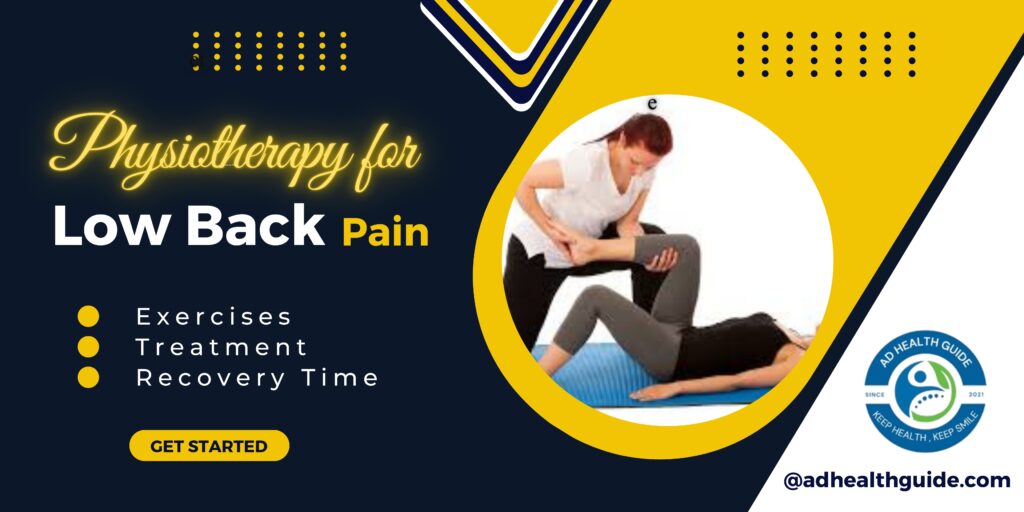
Lower back pain is one of the most common health problems affecting people of all ages. Long sitting hours, poor posture, lack of exercise, and stress on the spine have made back pain a daily struggle for many. Physiotherapy for lower back pain is considered one of the safest and most effective ways to reduce pain, improve mobility, and prevent future episodes. We explain lower back pain, its causes, symptoms, physiotherapy treatment for back pain, effective exercises, and expected back pain recovery time.
 What Is Lower Back Pain?
Lower back pain refers to discomfort, stiffness, or pain in the lower part of the spine, also known as the lumbar region. It can be acute (short-term) or chronic (lasting more than 3 months). The pain may stay in one area or radiate to the hips and legs. Physiotherapy focuses on treating the root cause of pain rather than just masking symptoms.
Symptoms of Lower Back Pain
Early Symptoms
-
Mild pain or stiffness in the lower back
-
Difficulty bending or standing for long periods
-
Muscle tightness
Severe Symptoms
-
Sharp or shooting pain
-
Pain radiating to legs (sciatica)
-
Numbness or tingling
-
Reduced mobility
Causes & Risk Factors
Lifestyle Factors
-
Prolonged sitting or standing
-
Poor posture
-
Heavy lifting without proper technique
Age & Habits
-
Weak core muscles
-
Lack of physical activity
-
Obesity
Medical Causes
-
Muscle strain
-
Disc bulge or herniation
-
Degenerative spine changes
How Physiotherapy Helps in Lower Back Pain
Physiotherapy treatment for back pain aims to:
-
Reduce pain and inflammation
-
Improve spinal flexibility
-
Strengthen back and core muscles
-
Restore normal movement
-
Prevent recurrence
A physiotherapist designs a personalized treatment plan based on pain severity and lifestyle.
Best Lower Back Pain Exercises (Physiotherapy Based)
Common Physiotherapy Exercises
-
Pelvic tilts
-
Knee-to-chest stretch
-
Cat–cow stretch
-
Bridging exercise
-
Core strengthening exercises
These lower back pain exercises help reduce stiffness, improve posture, and support spinal health.
Prevention & Daily Management Tips
Posture & Habits
-
Sit with proper lumbar support
-
Avoid slouching
-
Take breaks every 30–40 minutes
Lifestyle Changes
-
Maintain a healthy weight
-
Stay physically active
-
Use proper lifting techniques
Exercise Routine
-
Regular stretching
-
Core and back strengthening exercises
Physiotherapy Treatment Options for Back Pain
A physiotherapist may use:
-
Manual therapy
-
Electrotherapy (heat, ultrasound, TENS)
-
Postural correction programs
-
Exercise therapy
-
Ergonomic advice
These treatments are safe and effective when tailored to individual needs.
Back Pain Recovery Time
Back pain recovery time depends on:
-
Severity of pain
-
Cause of the condition
-
Consistency with physiotherapy
Estimated Recovery
-
Mild pain: 1–2 weeks
-
Moderate pain: 3–6 weeks
-
Chronic pain: Several weeks to months
Early physiotherapy leads to faster and better recovery.
When to See a Physiotherapist or Doctor
-
Pain lasting more than 7–10 days
-
Pain worsening with time
-
Numbness, weakness, or leg pain
-
Difficulty performing daily activities
Conclusion
Lower back pain can affect daily life, but it is highly manageable with the right care. Physiotherapy for lower back pain focuses on pain relief, strength building, and long-term prevention. With proper treatment, exercises, and healthy habits, most people recover successfully and return to normal activities.
 Medical Disclaimer
This article is for informational purposes only and does not replace professional medical advice. Always consult a qualified physiotherapist or healthcare provider.
FAQs
Q1. Is physiotherapy effective for lower back pain?
Yes, physiotherapy is one of the most effective non-surgical treatments for lower back pain.
Q2. Can lower back pain be cured completely?
Most cases improve significantly with proper physiotherapy and lifestyle changes.
Q3. How often should physiotherapy sessions be taken?
This depends on pain severity and is decided by the physiotherapist.
Q4. Are exercises alone enough for back pain?
Exercises are important, but professional assessment and guidance improve results.
Yes, physiotherapy is one of the most effective non-surgical treatments for lower back pain.
Most cases improve significantly with proper physiotherapy and lifestyle changes.
This depends on pain severity and is decided by the physiotherapist.
Exercises are important, but professional assessment and guidance improve results.